
Last updated: September 2, 2026 Some links are affiliate links, see our Affiliate Disclosure.
China Visa-Free Mutual Exemption Agreements: What They Actually Mean for Travelers
You may have heard that your country has a "visa-free agreement" with China, and assumed that means you can book a flight and walk in without a visa. Sometimes that's true. Often it isn't. China has several different visa-free systems, and the mutual exemption agreement is the one people misread the most.
Here's the short version: a country being on China's mutual visa exemption list does not automatically mean ordinary tourists from that country can skip the visa. Many of these agreements only cover diplomatic, service, or official passports, not the regular passport in your pocket. So the real question isn't "Does my country have an agreement with China?" It's "Does that agreement cover ordinary passports?"
This guide explains the difference in plain English, and shows which countries' agreements actually help normal travelers.
What a Mutual Exemption Agreement Actually Is
A mutual visa exemption agreement is a two-way deal between China and another country. "Mutual" is the key word: China lets eligible passport holders from that country in without a visa, and that country does the same for eligible Chinese passport holders.
The catch is in the word "eligible." Each agreement spells out which passport types it covers. Some cover only diplomatic passports. Some add service or official passports. Only some include ordinary passports, the kind tourists, students, business visitors, and people visiting family carry.
If you're a regular traveler, the only line that matters to you is whether ordinary passports are covered. Everything else is for officials.
The Mistake Almost Everyone Makes
People check the country name and stop there. That's not enough. Before you rely on a mutual exemption agreement, you need to check six things:
- Is your country covered at all?
- Does the agreement cover ordinary passports, or only diplomatic and official ones?
- How many days does it allow per visit?
- Is there a rolling limit, like 90 days within any 180?
- Is your trip purpose allowed?
- Does it apply to individual travelers, or only to organized tour groups?
Miss one of these and you can get turned around at the border, even though your country is "on the list."
Mutual Exemption vs the 30-Day Policy vs Transit
This is where the confusion comes from. Three different systems can all put a country in a "China visa-free" conversation:
- Mutual exemption agreement is a two-way deal. Both countries waive visas for each other's eligible passport holders. You can usually enter China directly, with no onward ticket needed.
- Unilateral 30-day visa-free policy is a one-way decision by China. China lets ordinary passport holders from certain countries in for up to 30 days, and those countries don't have to offer Chinese citizens anything back. This is the policy covered in our 30-day visa-free guide.
- 240-hour visa-free transit is only for travelers passing through China to a third country, with a confirmed onward ticket. Up to 10 days. See our 240-hour transit guide.
Same traveler, three different rulebooks. Always know which one you're actually using.
If you're not sure which one applies to your passport, our Visa-Free Ways to Enter China hub walks through all of them.
Countries Whose Agreement Covers Ordinary Passports
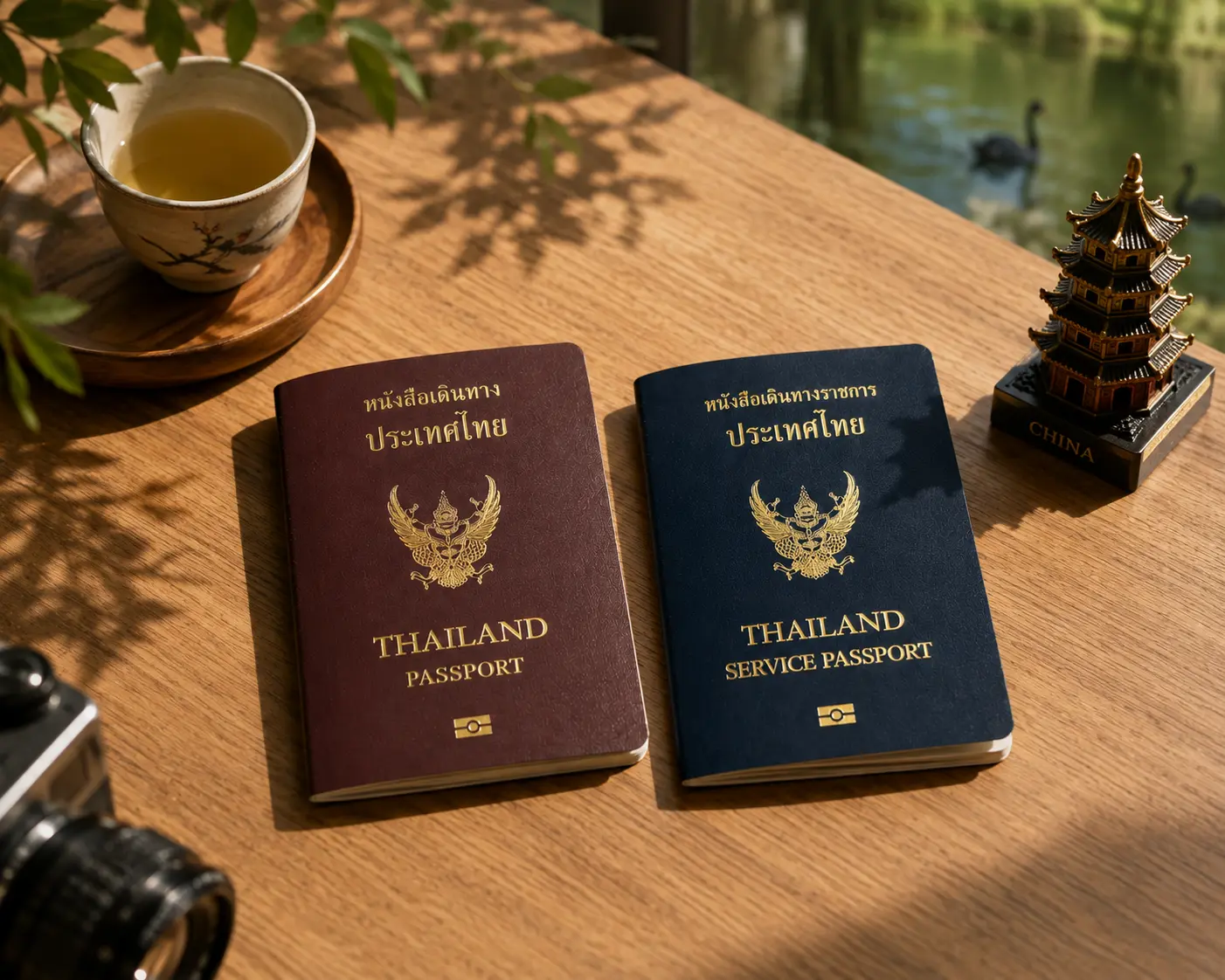
Read this first: the list below is only for ordinary (normal) passport holders, the regular passport most travelers carry. It does not cover diplomatic, service, or official passports, which follow different rules. If your country isn't on this list, your mutual agreement with China may only apply to those special passports, not to you as a tourist.
These are the mutual exemption agreements that matter for normal travelers. Stay limits vary, so treat this as your starting point and confirm your exact limit on the official list (linked at the bottom) before you book.
| Country | Typical stay rule |
|---|---|
| Albania | Up to 90 days within any 180-day period |
| Antigua and Barbuda | 30 days per visit; max 90 days within any 180 |
| Armenia | Up to 90 days within any 180-day period |
| Azerbaijan | 30 days per visit; max 90 days within any 180 |
| The Bahamas | 30 days |
| Barbados | 30 days |
| Belarus | 30 days per visit; no more than 90 days per year |
| Bosnia and Herzegovina | Up to 90 days within any 180-day period |
| Dominica | 30 days |
| Ecuador | 30 days, but Chinese citizens currently still need a visa for Ecuador; confirm before relying on it |
| Fiji | 30 days |
| Georgia | 30 days per visit; max 90 days within any 180 |
| Grenada | Covered; confirm exact stay rule |
| Kazakhstan | 30 days per visit; max 90 days within any 180 |
| Malaysia | 30 days per visit; max 90 days within any 180 |
| Maldives | 30 days |
| Mauritius | 60 days |
| Qatar | 30 days |
| Samoa | 30 days per visit; max 90 days within any 180 |
| San Marino | Up to 90 days |
| Serbia | 30 days |
| Seychelles | 30 days |
| Singapore | 30 days |
| Solomon Islands | 30 days per visit; max 90 days within any 180 |
| Suriname | 30 days |
| Thailand | 30 days per visit; max 90 days within any 180 |
| Tonga | Covered; confirm exact stay rule |
| United Arab Emirates | 30 days |
| Uzbekistan | 30 days per visit; max 90 days within any 180 |
Some of the newest additions, Malaysia (effective July 17, 2025), Azerbaijan (July 16, 2025), and Uzbekistan (June 1, 2025), all follow the same pattern: ordinary passports, 30 days per visit, and a 90-days-within-180 cap.
Not sure your trip qualifies? Send us your route for a Route Review and we'll check your passport type, stay limit, and rolling cap against the published rules before you book.
Watch Out: "Group Travel Only" Countries
A few agreements list ordinary passports only for organized tour groups, not for solo travelers. Moldova and Turkmenistan are the two to watch. On China's official mutual exemption list, they appear with diplomatic, service, or public-affairs documents plus group tourism, not normal solo, ordinary-passport tourism. So if you hold an ordinary Moldovan or Turkmen passport, don't assume the mutual agreement lets you fly to Beijing on your own and walk in. Unless you're traveling as part of a qualifying organized tour, those rules don't apply to you.
Russia is a special case worth understanding, because it shows exactly why you have to check which system you're using. On the mutual exemption table alone, Russia is listed only under group tourism plus diplomatic and service passports, so the table by itself wouldn't let a solo Russian tourist in. But Russia also has a separate arrangement: under a unilateral China policy running from September 15, 2025 through December 31, 2027, Russian ordinary-passport holders can currently enter China visa-free on their own for up to 30 days, for business, tourism, visiting family and friends, exchanges, or transit.
What You Can Do, and What You Can't
Mutual exemption agreements are for short visits: tourism, visiting friends and family, business meetings, exchanges, and depending on the agreement, things like medical treatment or transit.
They are not for:
- Working in China
- Long-term study
- Journalism or media reporting
- Living in China long-term
Even if your passport qualifies for visa-free entry, your activity still has to fit. China has separate visas for the rest: work, study, and journalism. If your purpose isn't a short visit, you need the right visa, not visa-free entry.
How Stay Limits Really Work
Stay limits aren't the same everywhere. Some countries give you a flat 30 days, a few allow 60 or up to 90, and many add a rolling cap, usually 90 days within any 180-day period. When there's a cap, the per-visit limit and the total limit work together. For example, if your rule is "30 days per visit, up to 90 days within 180," you could visit for 30 days, leave, come back later for another 30, and do that one more time. But once you've used 90 days inside that 180-day window, you have to wait before you can enter visa-free again. So always check both numbers: the days allowed per visit and the total over the longer period.
What to Carry at the Border
Visa-free doesn't mean "no documents." It means you didn't have to apply in advance. Border officers can still ask why you're here, where you're staying, and when you're leaving. Have these ready:
- A valid passport
- A return or onward ticket
- A hotel booking or the address where you'll stay
- An invitation letter, if you're visiting a person or company
- A rough itinerary
- Enough to show your trip matches the visa-free purpose and that you'll leave on time
Book your hotels and flights here on Trip.com. This is a China-native platform, so it has the biggest selection of hotels around mainland China.
Quick Checklist Before You Fly
- Is your country in a mutual exemption agreement with China?
- Does it cover ordinary passports, not just diplomatic or official?
- Is your passport valid long enough?
- How many days are allowed per visit?
- Is there a rolling cap, like 90 within 180?
- Is your trip purpose allowed?
- Are you traveling solo, or does the rule require a tour group?
- Do you have proof of onward travel, a place to stay, and your purpose?
- Have you checked the latest notice from the Chinese embassy in your country?
Before you go
- Book your flights and accommodation. Having a return or onward ticket and a hotel booking can be very helpful at the border, so search flights and find a China hotel on Trip.com.
- Get mobile data before you land. Get a China eSIM or international roaming so you have internet the moment you land.
- Set up a VPN before you enter China. Google, Gmail, WhatsApp, and Instagram are blocked in China, so install a VPN before you arrive. You usually can't download one once you're in the country.
- Get the payment apps ready. Almost everything is paid by phone. Download WeChat and Alipay and link your card before you fly. Our first China trip article walks you through the apps, payments, eSIM, and VPN step by step.
- Or if you'd rather have everything in one place, we've put it into one big PDF guide. Buy it once and it's yours to keep.
Want us to help?
Explore our Trip Planning and Route Review services, or contact us to plan your China trip.
FAQ
Is "mutual exemption" the same as China's 30-day visa-free policy?
No. Mutual exemption is a two-way agreement between China and another country. The 30-day policy is a one-way rule China created on its own. Different lists, different terms.
My country is on a "China visa-free" list. Am I covered?
Maybe, but check which list. You might be covered by a mutual agreement, by the unilateral 30-day policy, by the transit policy, or not at all for your passport type.
Does the agreement cover my ordinary passport?
Many agreements only cover diplomatic or official passports. Only the ones that include ordinary passports give regular travelers the chance to enter visa-free. Check the country list above to see if your passport qualifies, that list is specifically for ordinary (normal) passport holders.
Can I work or study on visa-free entry?
No. It's for short visits only: tourism, family, business meetings, exchanges. Work, study, and journalism need the proper visa.
Can I keep leaving and re-entering to stay longer?
Not if there's a rolling cap. Once you hit the limit (often 90 days within 180), you have to wait before entering visa-free again.
Bottom Line
A mutual visa exemption agreement is a two-way deal, but it only helps you if it covers your ordinary passport. Many don't. Even when yours is covered, the stay limit varies (30, 60, or 90 days, often with a 90-within-180 cap), and it's for short visits only, never work, study, or journalism.
The safe rule: don't check just the country name. Check the passport type, the stay limit, the rolling cap, your trip purpose, and the latest official notice before you go.
Sources
Visa policies can change. Always verify requirements with official Chinese government sources before traveling.
- National Immigration Administration — Mutual Visa Exemption Agreements
- Ministry of Foreign Affairs — List of Mutual Visa Exemption Agreements
- NIA — Unilateral Visa Exemption Country List
- State Council — Visa-free policy trial for Russian citizens (Sept 15, 2025 to Sept 14, 2026)
- Ministry of Foreign Affairs — Visa-free policy for Russian citizens extended to December 31, 2027 (May 20, 2026)
- NIA — 240-Hour Transit Visa-Free Policy