
Last updated: September 2, 2026 Some links are affiliate links, see our Affiliate Disclosure.
China 240-Hour Visa-Free Transit: Stay Up to 10 Days Without a Visa

Flying through China on your way somewhere else? If you meet a few conditions, you can step out of the airport and stay in China for up to 10 days without applying for a separate visa. This is called the 240-hour visa-free transit policy.
Right now, ordinary passport holders from 57 countries can use it. Ten days is enough time to do more than change planes, you can actually travel around several Chinese cities.
That said, most of those countries can already use China's simpler 30-day visa-free policy, which doesn't need an onward ticket to a third country at all.
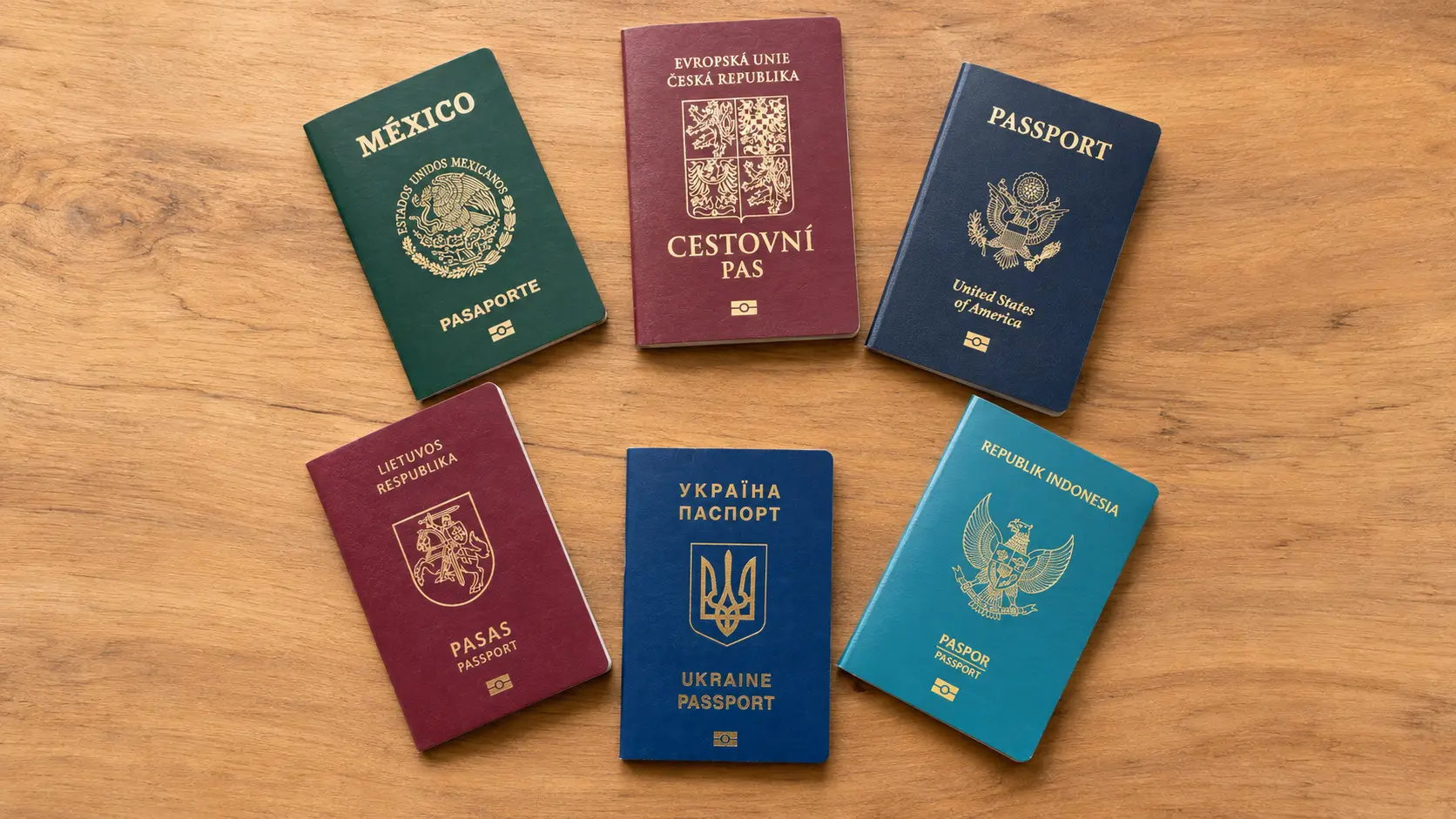
The eight countries below are not on China's nationwide 30-day visa-free list, but they can use the 240-hour transit policy. For them, this is the main way to visit China without applying for a visa.
Who This Article Is For
- Czech Republic
- Indonesia
- Kyrgyzstan
- Lithuania
- Mexico
- Ukraine
- United States
- Vietnam
One thing worth knowing: all eight of these countries are also on Hainan's own visa-free list. Hainan is a resort island in the south of China, known for its beaches. It's a smaller policy because it only covers that one island, but it lets you fly straight to Hainan and stay for 30 days without a visa. So if Hainan is where you're planning to go, read our Hainan visa-free article.
If your country is on this list, keep reading, the rest of the article is for you. If you don't see your country, check our Visa-Free Ways to Enter China hub. There may be a simpler way in, or you may need to apply for a regular visa.
The Rule That Confuses Most Travelers
The country or region immediately before mainland China and the first country or region after mainland China must be different. It does not matter where your full journey originally began or where you live. Arriving from Korea and flying back to Korea, for example, doesn't count, China has to sit between two different countries or regions on your itinerary.
Here are the common examples.
Example that doesn't qualify:
New York → Seoul → Shanghai → Seoul → New York ❌ You arrived from South Korea and you're leaving back to South Korea. Same country before and after China. Does not qualify.
Same trip with one change:
New York → Seoul → Shanghai → New York (fly home direct from Shanghai) ✅ You arrived from South Korea and you're leaving to the USA. Two different countries. Qualifies.
Or add a stop in a third country on the way back:
New York → Seoul → Shanghai → Tokyo → New York ✅ Even though you end up back in New York, the first country after China is now Japan, not Korea, so it qualifies. Even a layover is enough, so a quick connection in Tokyo counts.
The fix is almost always the same: fly to China with a layover, then either fly home directly from China or continue onward to a third country (Tokyo, Singapore, Hong Kong, or anywhere that isn't where you came from).
Once you have your trip planned, search flights on Trip.com to get your plane tickets.
Hong Kong, Macao, and Taiwan count as separate regions for this rule, so:
New York → Beijing → Hong Kong ✅ qualifies, because Hong Kong is treated as a different region from mainland China.
When the 240 Hours Actually Start
Your 10-day clock does not start the moment you land. It starts at 00:00 on the day after you enter China.
So if you land in Shanghai on a Monday afternoon, the clock starts at midnight going into Tuesday. That gives you a little bonus time on arrival day, which most people don't realize.
That said, your real deadline to leave is the date written on the temporary-entry permit you're given at the border. Don't just count from your arrival time yourself, always check the final departure date printed on the permit.
Where You Can Enter
You have to enter through one of the 65 eligible ports. These aren't just airports: they include railway stations, seaports, and land border crossings too. The major ones cover most international travelers: Beijing, Shanghai, Guangzhou, Shenzhen, Chengdu, Xi'an, Hangzhou, Nanjing, Xiamen, Chongqing, Tianjin, Qingdao, Kunming, Harbin, and Dalian.
In November 2025, five new ports in the Guangdong area were added, including the Hong Kong-Zhuhai-Macao Bridge port and the West Kowloon high-speed rail station, which makes overland entry from Hong Kong much easier than it used to be.
Not sure if your specific port qualifies? Use the checker below.
Popular searches
Where You Can Travel Inside China
The policy covers 24 provincial-level regions, including Beijing, Tianjin, Hebei, Shanghai, Jiangsu, Zhejiang, Guangdong, Sichuan, Chongqing, Shaanxi, Fujian, Hainan, Liaoning, and Heilongjiang. You can cross between them within the permitted area.
Being on the list of 24 regions doesn't mean the whole province is open. In some regions you can travel the entire province; in others, only certain cities are included. Your whole itinerary has to stay inside the permitted area, so don't assume a city is allowed just because it's in China.
Check every destination against the official permitted-area list before you book hotels or transport. Use the checker below if you're not sure.
Popular searches
What You Can and Can't Do
During the 240 hours you can use the time for:
- Tourism
- Short business meetings
- Visiting friends or family
- Short exchange visits
- Travel between permitted cities
You can't use it for:
- Paid work in China
- Long-term study
- News reporting that requires approval
- Anything aimed at staying long-term
If that's why you're coming, you need the visa that matches your purpose. This policy isn't a workaround.
Documents You Need
Documents you must have:
- An ordinary passport from an eligible country, valid for at least 3 months
- Confirmed onward travel out of China to a different country or region, leaving within 240 hours
- A visa or entry permit for that third country or region, if one is required
- The arrival card, which you fill in on entry (online before you fly, or on arrival)
Your onward travel doesn't have to be a flight. A qualifying international train or ferry booking counts too.
Good to have as well:
- A hotel booking or the address where you'll be staying
- A simple itinerary showing which Chinese cities you'll visit
- Your departure date and transport details
Book your hotels and flights here on Trip.com. This is a China-native platform, so it has the biggest selection of hotels around mainland China.
You don't apply for this policy in advance. When you check in for your flight, tell the airline staff you'll be using the 240-hour visa-free transit.
After you land in China, follow the signs for 240-hour visa-free transit or temporary entry to the dedicated counter. There you'll show your passport, onward ticket, and travel plan, and request temporary entry.
Meeting every condition still doesn't guarantee entry. The final decision always rests with the border inspection authority at your port of entry.
A Few Notes
- The "90 days per 180 days" rule from some visa-free agreements is not the same as how the 240-hour transit is counted. The published rules for the 240-hour transit don't state that kind of cumulative limit.
- You can use it again on a separate trip if you meet the route and stay conditions again, but each entry is assessed on its own at the border.
- If China adds your country to the 30-day visa-free policy in the future, that will be the simpler option, with a longer stay and no onward ticket required. For now, this is the way.
Before you go
- Book your onward flight. The policy needs an onward ticket to a different country, so lock that in first. Search flights on Trip.com.
- Book your accommodation. Find a China hotel on Trip.com and keep the confirmation to show at immigration.
- Get mobile data before you land. Get a China eSIM or international roaming so you have internet the moment you land.
- Set up a VPN before you enter China. Google, Gmail, WhatsApp, and Instagram are blocked in China, so install a VPN before you arrive. You usually can't download one once you're in the country.
- Get the payment apps ready. Almost everything is paid by phone. Download WeChat and Alipay and link your card before you fly. Our first China trip article walks you through the apps, payments, eSIM, and VPN step by step.
- Or if you'd rather have everything in one place, we've put it into one big PDF guide. Buy it once and it's yours to keep.
Want us to help?
Explore our Trip Planning and Route Review services, or contact us to plan your China trip.
FAQ
Is this a tourist visa?
No. It's a transit policy, used when China isn't your final destination. There's no application, no fee, and no advance approval. You request temporary entry at the border when you arrive.
Can I stay exactly 10 days?
Up to 10 days. The count usually starts at midnight the day after you arrive, so your arrival day is essentially a bonus. Check the final departure date on the temporary-entry permit you're given at the border.
Can I fly in and out of the same country?
No. The country or region you arrive from and the one you leave for must be different. See the New York → Seoul example above.
Does Hong Kong count as a third region?
Yes. Hong Kong, Macao, and Taiwan are treated as separate regions from mainland China for this policy. New York → Beijing → Hong Kong qualifies.
Can I visit more than one mainland Chinese city?
Yes, as long as every city is inside the permitted area. Some provinces only allow certain cities, so check the official list before booking multi-city travel.
Can I do business meetings?
Yes. Short business activities and ordinary business visits are allowed. Being employed by a Chinese company or doing paid work is not.
Do I need to apply before traveling?
You don't apply for a China visa in advance. After you arrive, you request temporary entry at a dedicated counter, where the border authority checks your passport, onward ticket, and travel plan and decides on the spot.
Sources
Visa policies can change. Always verify requirements with official Chinese government sources before traveling.
- National Immigration Administration — Visa-Free Transit Policies
- NIA — Conditions and ports for 240-hour visa-free transit
- NIA — Unilateral visa-free entry policy for ordinary passport holders
- NIA — List of mutual visa-exemption agreements
- NIA — Indonesia added to 240-hour visa-free transit
- State Council of China — 240-hour visa-free transit overview