
Last updated: September 2, 2026 Some links are affiliate links — see our Affiliate Disclosure.
Beijing Layover: What to Do Visa-Free
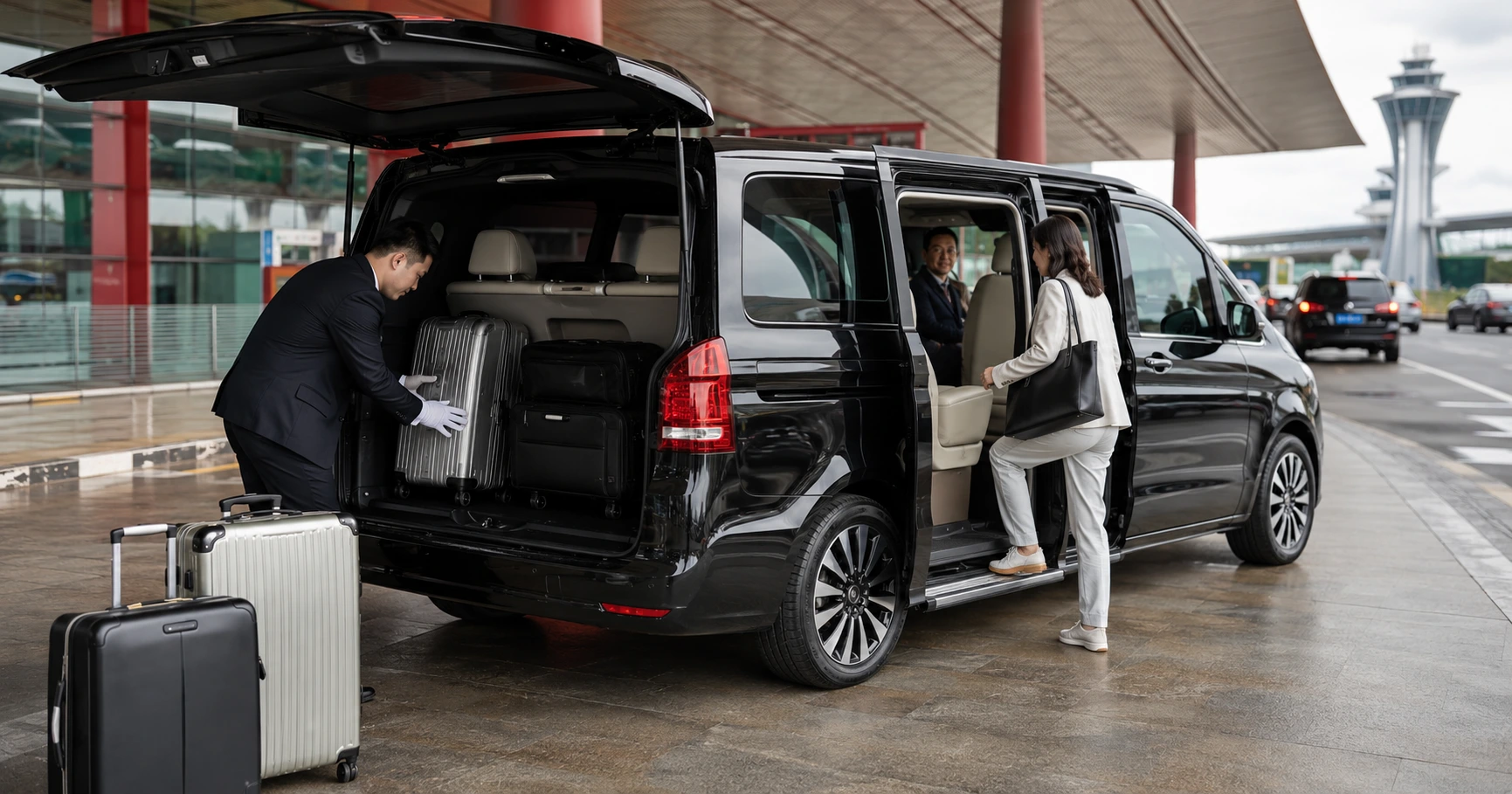
Got a layover in Beijing? If you're passing through on your way to another country, there's a good chance you can leave the airport and see the city visa-free — anywhere from a quick stop to up to 10 full days, enough time for the Great Wall and the Forbidden City.
Two visa-free transit policies make this possible: a 24-hour transit that's open to travelers from every country for short stops, and the 240-hour visa-free transit policy that gives citizens of 57 countries up to 10 days. This guide checks which one fits your trip, shows you what to do in Beijing, and walks through the practical stuff.
How the Visa-Free Transit Works
China runs two transit routes for travelers passing through on the way to a third country or region. The 24-hour visa-free transit is open to travelers from every country, as long as they meet the transit conditions, if you'll be in China for a day or less. The 240-hour visa-free transit policy covers more than 50 nationalities and lets you stay up to 10 days, reaching almost every major tourist city — Beijing, Shanghai, Xi'an, Chengdu, Guangzhou, and most of the places visitors actually want to see.
Don't worry about memorizing port lists or province names. Both Beijing airports, Capital (PEK) and Daxing (PKX), are covered under both routes, and the Eligibility Finder below tells you which policy fits your exact trip. We explain where you can travel further down.
You don't apply for either one ahead of time. You show up at immigration with your documents, mention you're using visa-free transit, and the officer processes you on the spot. The one real condition for both: a confirmed onward ticket to a country or region that's different from the one you arrived from.
Already planning the stop? You can book your flights to China and Beijing hotels on Trip.com — many are refundable, which helps if your layover times shift.
Eligibility Finder
The Eligibility Finder covers the two big conditions: your nationality and your length of stay.
Who Qualifies
It really comes down to two things: your passport and your flights. The 240-hour transit is for passport holders from 57 countries; the 24-hour transit is open to almost everyone, just for a shorter stay. The flights are the simple part — you're stopping in China on the way to somewhere else, so you fly in from one country and out to a different one, with that next flight already booked. (Hong Kong, Macao, and Taiwan count as different places too.)
That's really all there is to it. If you want the full step-by-step, with example trips, read our 240-hour visa-free transit guide.
Meeting these requirements is routine for most travelers, but final approval always rests with the immigration inspection officers at the port of entry.
What If Your Country Isn't on the 240-Hour List?
You may still be able to leave the airport. Separate from the 240-hour policy, China runs a 24-hour visa-free transit that's open to travelers from every country. If you're connecting through China to a third country or region and you'll be in China for 24 hours or less, you can transit without a visa.
China's National Immigration Administration describes it as applying to "foreign nationals from all other countries around the world." The conditions are:
- You hold a valid travel document and a connecting ticket onward.
- You're transiting by international flight, ship, or train to a third country or region — the place you arrive from and the place you leave for must be different (Hong Kong, Macao, and Taiwan count as separate).
- Your stay is 24 hours or less.
If you only need the airport, you're covered automatically. If you want to leave the airport during a 24-hour transit, ask immigration for a temporary entry permit; if it's approved, you can head into the city during your transit window. So even if your passport isn't on the 57-country 240-hour list, a short Beijing stopover under 24 hours can still get you out to see the city.
There's one more thing worth checking: if you hold an ordinary passport from a country on China's 30-day unilateral visa-free list, your layover still works — you just don't need a transit policy for it. You can leave the airport and stay as long as your stopover lasts. On paper, China counts it as a normal 30-day visa-free visit rather than a transit, but for you nothing changes: you arrive, you see the city, and you fly out. The Eligibility Finder above will tell you which option fits your passport.
Both Beijing Airports Qualify
Beijing has two eligible airports — Beijing Capital (PEK) and Beijing Daxing (PKX). Both are covered under both transit policies, and you can fly into one and out of the other if your flights work that way.
Most long-haul international flights use Capital (PEK), while Daxing (PKX) is the newer hub south of the city. Either way, you're covered.
How Long You Can Actually Stay
On the 24-hour transit you have up to 24 hours from arrival. On the 240-hour transit you get 10 full days — and the count starts at 00:00 on the day after you enter, so if you land in Beijing on a Monday afternoon, your window starts at midnight going into Tuesday. The clock doesn't start the second you land, which makes your arrival day essentially a bonus.
Where You Can Travel During Your Stay
Here's the part a lot of older guides get wrong: since December 2024, the 240-hour policy lets you travel across the 24 permitted provinces and regions — you're not locked into Beijing. Most layover travelers stay around the capital, but you can legally go further.
Around Beijing, that easily covers:
- Beijing itself — the Forbidden City, Tiananmen Square, the hutongs, the Summer Palace, the Temple of Heaven
- The Great Wall — the Mutianyu, Badaling, and Jinshanling sections are all an easy day trip
- Tianjin — about 30 minutes away by high-speed train, and inside the permitted area
If you have the time and the onward flight to match, you can even continue to other permitted cities like Shanghai or Xi'an, all under the same visa-free entry. Don't see the specific place you're headed? Our 240-hour visa-free transit guide has the full list of regions you can visit.
The 240-hour policy applies only within the officially permitted stay areas. Major excluded areas include Tibet, Xinjiang, Gansu, Qinghai, Ningxia, Inner Mongolia, and Jilin. Always confirm unusual destinations before booking.
What You Can Do — and What You Can't
During your stay you can do tourism, business, exchange visits, or family visits. You can sightsee, meet friends, attend a conference, or visit family.
You can't take a paid job or enroll in a course. Work, study, and journalism need the right visa. If that's why you're coming, this policy isn't enough.
How It Differs From China's Other Visa-Free Systems
For a layover there are two transit routes — the 24-hour and the 240-hour. Here's how they differ, plus the option for travelers who'd rather make China a real stop:
| Route | Who it's for | Onward ticket to a different country or region? | Max stay |
|---|---|---|---|
| 24-hour transit | Any nationality | Yes | Up to 24 hours |
| 240-hour transit | 57 eligible countries | Yes | Up to 10 days |
| 30-day visa-free (not a transit) | Countries on the 30-day list or with an exemption agreement | No | 30 days or more |
The first two are transit routes — you're passing through, so you need an onward ticket to a different country or region. The last isn't a transit at all: if your country is on China's 30-day visa-free list, you can still make the stop. It just counts as a 30-day visa-free visit instead of a transit. Not sure if that's you? Our 30-day visa-free guide explains who qualifies.
What to Carry at Immigration
When you land in Beijing, have these ready:
- Valid passport or international travel document, valid for at least 3 months.
- Confirmed onward ticket to a third country or region, leaving within your transit window.
- Accommodation details, if you're staying overnight. A hotel booking or the address where you're staying. If you're only stopping for the day and not spending the night, you can skip this.
- Arrival card. You can fill it out online before you fly, complete it online at the airport by QR code, or use a paper arrival card at the port if needed. We show you exactly where to find it and how to fill it in our China entry requirements guide.
The onward ticket is the big one. It has to show you're leaving China for a different country or region than the one you came from, within your transit window.
One thing to keep in mind: when you check in for your flight to China, some airline staff may not know the transit policy and could ask about a visa. Have your onward ticket ready and tell them you're traveling visa-free under the transit policy — that usually clears it up.
A 2-Day Beijing Layover Itinerary
Here's what you can realistically see if you have two full days in Beijing during a visa-free layover.
Only have one day? If you're on a 24-hour transit, pick either Day 1 or Day 2 below. Each one works as a full day on its own.
Two quick things before the plan. First, get the practical stuff sorted — the apps, payments, eSIM, and VPN you'll want set up before you land — with our complete first China trip guide. Second, if your layover is in a different city, the same rules in this guide still apply — only the sights change. For what to actually see and do in Shanghai, Xi'an, and the other big cities, use our 30-day China itinerary; any single day from it makes a great layover on its own.
Day 1 — The Great Wall
If you do one thing in Beijing, walk the Great Wall (长城). It's the view all over your feed, and it's the reason a lot of people leave the airport in the first place. The Mutianyu (慕田峪) section is the favourite for a day trip from the city — dramatic, restored, and less crowded than Badaling (八达岭). Jinshanling (金山岭) is farther but wilder if you want fewer people and more raw wall.
It's a half-to-full day once you count the drive each way, so start early. On a tight layover, the easiest option is a guided day trip or a private car: you get picked up, driven there and back, and don't have to figure out local buses yourself.
Back in the city for the evening, the 798 Art District (798艺术区) — contemporary galleries in an old factory zone — is a relaxed way to end the day. Or just go find Peking duck.
Day 2 — Forbidden City, Tiananmen, and Old Beijing
Start at the Forbidden City (故宫) — the huge old imperial palace in the middle of Beijing, and one of the most photographed places in the country. Only a set number of people can go in each day, so book your ticket ahead. It opens straight onto Tiananmen Square (天安门广场), the enormous public square right in front.
After that, a few more places you'll recognise from all over Beijing's photos online:
- Temple of Heaven (天坛) — a beautiful round blue-and-gold temple in a big park. Emperors once came here to pray for good harvests; today locals fill the park doing tai chi and dancing each morning.
- The hutongs (胡同) — Beijing's old narrow alleyways lined with grey courtyard houses. Wander them on foot, or ride through on a pedicab (a bicycle taxi).
- Summer Palace (颐和园) — a huge lakeside garden and palace on the edge of the city, with long painted walkways and a famous marble boat. A calm half-day if you want to slow down.
- Lama Temple (雍和宫) — a colourful, incense-filled Tibetan Buddhist temple right in the middle of town.
Leave room to eat: Beijing is where you'll find Peking duck done the traditional way, hand-pulled noodles, jianbing (street crepes), and some of the best dumplings in the country.
Practical Notes for a Short Layover
- Stay central or near the Airport Express. Beijing is big and traffic is real, so pick a hotel near a subway line or the Airport Express. That way you spend your layover seeing the city instead of sitting in traffic.
- Get mobile data before you land. Grab a China eSIM so you have maps and translation apps the second you leave the airport. Don't count on airport Wi-Fi.
- Set up a VPN before you arrive. Google Maps, Gmail, WhatsApp, and Instagram are blocked in China, so install a VPN on your phone before you fly — you usually can't download one once you're in the country.
- Download Alipay and WeChat before you go. Almost everything in Beijing is paid by phone. Link your credit card inside each app before you land so you can pay for the subway, taxis, food, and tickets. Our first China trip guide walks you through setting them up.
- Book your tickets and tours in advance. Entrance tickets, day trips, and tours sell out at the popular spots — the Forbidden City limits how many people get in each day. If there's somewhere you really want to see, book it before you go.
Quick Checklist Before You Fly
- Your passport is valid for at least 3 months
- You have a confirmed onward ticket leaving China for a different country or region than the one you arrived from, within your transit window
- The places you plan to visit are inside the permitted areas (not Tibet, Xinjiang, and the other excluded regions)
- Your trip purpose is tourism, business, visiting, or exchange — not work or study
- You've sorted your arrival card (online before you fly, or at the airport)
You can book Beijing hotels and any Great Wall day trips or train tickets on Trip.com, a China-native platform with strong mainland coverage and booking in the language you prefer. Many properties offer free cancellation, so if your flight is delayed or your layover shrinks, you're not out the money. A confirmed Trip.com booking also gives you the accommodation proof immigration officers look for.
Or if you'd rather have everything for a China trip — visa rules, apps, payments, transport, what to do — in one place instead of across a dozen articles, we've put it all into one big PDF guide. Buy it once and it's yours to keep. Most of the advice stays useful for years, even if some visa rules shift.
FAQ
Can I leave the airport during my Beijing layover?
Yes, if you qualify for visa-free transit and immigration grants temporary entry. For a 24-hour transit, staying airside is straightforward, but if you want to leave the airport, you must ask immigration for a temporary entry permit. Citizens of the 57 eligible countries may qualify for up to 10 days under the 240-hour transit policy.
How long can I stay in Beijing without a visa?
It depends on your passport. Any nationality can stay up to 24 hours under the 24-hour transit policy. Citizens of the 57 eligible countries can stay up to 10 days under the 240-hour transit policy. And if you hold an ordinary passport from a country on China's 30-day unilateral visa-free list, you can skip the transit rules entirely and stay up to 30 days.
Do both Beijing airports qualify?
Yes. Beijing Capital International Airport (PEK) and Beijing Daxing International Airport (PKX) are both eligible ports for the 240-hour transit policy — and for the 24-hour transit too. You can fly into one and out of the other.
Can I visit the Great Wall?
Yes. The Great Wall sections closest to Beijing — Mutianyu, Badaling, and Jinshanling — are within the permitted area and easy to reach on a day trip from the city.
Can I visit Tianjin or other cities during my Beijing layover?
Yes. Since December 2024 the 240-hour transit policy lets you travel across the 24 permitted provinces and regions, so you can take the high-speed train to Tianjin or continue to other permitted cities, as long as your total stay is within 240 hours and you exit through a designated port. (On a 24-hour transit there isn't really time to leave Beijing.)
What if I'm flying from the US to Beijing and back to the US?
On its own, that round trip doesn't work for visa-free transit, because you'd arrive from and leave to the same country. The simplest option is a regular tourist visa — then you can spend as long in Beijing as you want, with no conditions on your flights. If you'd rather travel visa-free, you can use the 240-hour transit (or the 24-hour transit for a short stop), but you'd need to add another country or region to your trip. That can just be a layover, not a real stop — for example, fly home through Japan, South Korea, or Hong Kong, even if you only change planes there.
Can I enter through PEK and leave through PKX?
Yes. Both Beijing Capital (PEK) and Beijing Daxing (PKX) are designated ports for the 240-hour transit and the 24-hour transit, so you can enter through one and exit through the other, as long as your onward flight leaves within your transit window.
Do I need to apply in advance?
No. You request visa-free entry at immigration when you land. Bring your onward ticket, passport, and accommodation details, and the officer processes you on the spot.
What if my flight is delayed and I stay longer than 240 hours?
If you overstay through no fault of your own — flight cancellation, weather, mechanical issues — contact the Beijing Exit-Entry Administration or the China Immigration Service Hotline 12367 as soon as you know there's a problem. Don't wait until after the window closes.
Where do I book tours and activities in Beijing?
The two platforms most travelers use are Trip.com and Klook. Both list English-language Great Wall tours, Forbidden City skip-the-line tickets, hutong tours, day trips, and airport transfers.
Sources
- National Immigration Administration — Visa-Free Transit Policies
- National Immigration Administration — Announcement on China's 240-hour Visa-Free Transit Policy
- National Immigration Administration — China Extends 240-hour Visa-Free Transit Policy to 55 Countries
- National Immigration Administration — 24-Hour Visa-Free Transit Policy for Foreign Nationals
- State Council — China's Visa-Free Transit Policy Fully Relaxed and Optimized
Bottom Line
Beijing Capital (PEK) and Beijing Daxing (PKX) are both designated entry points for China's visa-free transit. If you're passing through on your way to a third country, you can leave the airport — for up to 24 hours under the 24-hour transit, which is open to travelers from every country, or up to 10 days under the 240-hour transit if your passport is on the list. With the longer window you can see the Great Wall and the Forbidden City and, since December 2024, travel across the 24 permitted regions, not just Beijing. The key requirement either way is that China sits between two different countries or regions on your itinerary. Bring your valid passport, confirmed onward ticket, and accommodation details, and immigration processes you on arrival. Final approval is always made by immigration inspection authorities at the port. For route-specific questions before booking, contact the China Immigration Service Hotline 12367.