
Last updated: June 21, 2026 Some links are affiliate links — see our Affiliate Disclosure.
Do You Need an Onward Ticket for Visa-Free China?
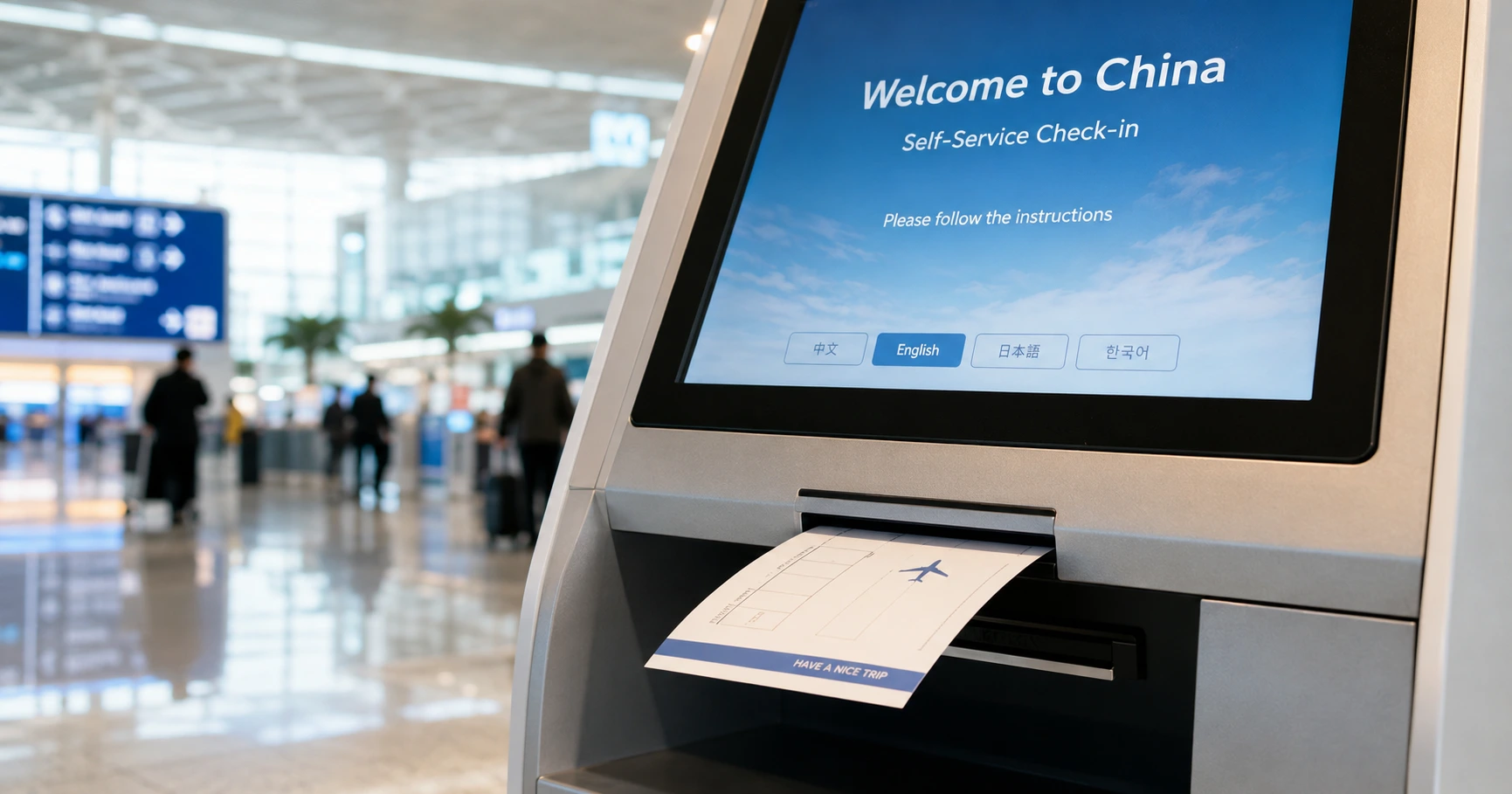
It's one of the most common questions about visa-free China: do you need an onward ticket? There's no single yes or no, because China runs several visa-free policies and they don't all follow the same rule. One requires a confirmed onward ticket to a third country. Another doesn't require onward travel at all. Which one applies to you depends on your nationality and your route, and mixing them up is how people end up at the gate with the wrong documents.
This guide sorts it out: which policy requires what, what "onward ticket" actually means at a Chinese border, and what to have ready so you aren't stopped before you board.
The Short Answer
It depends on which visa-free policy you're using:
- 240-hour visa-free transit: Yes. You must have a confirmed onward ticket, with a fixed date and seat, to a third country or region within the permitted period.
- 30-day unilateral visa-free entry: The published policy doesn't list an onward or return ticket as a formal condition. But airline staff or immigration officers may still ask about your departure plans, especially if you booked a one-way ticket.
- Hainan 30-day visa-free entry: The published Hainan conditions don't expressly list an onward ticket, but you must meet the nationality, passport, port, and geographic restrictions and remain within Hainan Province.
- Mutual visa exemption: Check the agreement for your own country, since the rules and length of stay vary.
The rest of this guide explains each one, plus the airline checks that can stop you even when China's policy wouldn't.
240-Hour Transit: Onward Ticket Required
If you're using the 240-hour visa-free transit policy, you must hold a confirmed onward ticket, with a fixed date and seat, to a third country or region, departing within the 240-hour window. The 240-hour stay period normally begins at 00:00 on the day after arrival, rather than at the exact time your flight lands.
This isn't optional. It's built into the policy. The whole idea is that you're transiting through China between two different countries or regions, so immigration needs proof that you're leaving, and leaving on time.
What "onward ticket" means here
Your ticket has to show:
- Confirmed dates and seat. Not an open ticket, not a plan to book later.
- Departure within the 240-hour window. Your flight, ship, or train out of China must leave before your window closes.
- A third country or region. Your destination has to be different from the country you arrived from.
The rule to watch: the place you fly out to must be different from the place you flew in from. China has to sit between two different countries or regions on your itinerary.
Routes that work:
- Singapore → Shanghai → Tokyo: you arrive from Singapore and leave for Japan. Three different places, so it qualifies.
- London → Beijing → Seoul (Seoul can just be a layover, not a real stop): you arrive from the UK and leave for South Korea, so it qualifies. The third stop doesn't have to be a destination you actually visit.
Routes that don't:
- Tokyo → Shanghai → Tokyo: arrived from Japan, returning to Japan. Same country. Does not qualify.
- US → Beijing → US: no third country at all. Does not qualify.
Hong Kong, Macao, and Taiwan are treated as separate regions from mainland China, so a route like US → Shanghai → Hong Kong can meet the third-country requirement when the other conditions are met.
What counts as proof
Proof may be an eligible international flight, ship, or train booking showing your name, confirmed departure date, and destination. The arrival and departure ports must both be permitted under the 240-hour policy, so check the official port list before booking a rail or ferry route. A hotel reservation doesn't count, and a rough itinerary doesn't count. They want transport proof.
A flexible or refundable onward ticket can be useful when your plans may genuinely change. At the time of entry, your booking and the travel plans you describe should be genuine and consistent.
When you'll be asked for it
- Check-in at your departure airport. Airlines check that you can legally enter China. Without a qualifying onward ticket, you don't meet the 240-hour transit conditions, and the airline may refuse boarding.
- Immigration in China. The officer checks that your onward ticket fits the 240-hour window and the third-country rule.
Save it where you can open it offline, like a downloaded file or a screenshot, and bring a printed copy too. Without a working VPN you may not be able to open your email or apps once you land, so don't count on pulling it up from your inbox.
30-Day Visa-Free: Not Required by the Policy
If your nationality is on the 30-day visa-free list (50 countries, including most of Europe, Japan, South Korea, Australia, New Zealand, Brazil, the UK, and Canada), the policy itself does not require you to hold an onward or return ticket to enter China. It lets eligible ordinary-passport holders enter for business, tourism, family visits, or transit for up to 30 days, and nothing in the official policy text says you must show proof of onward travel.
But that doesn't mean you'll never be asked for one.
Why you might still be asked
- Your airline at check-in. Airlines may ask for evidence of onward or return travel, particularly when you're traveling on a one-way ticket. Staff use destination-entry databases and may request additional evidence when they're uncertain whether you meet the entry conditions.
- Immigration officers in China. Border officers can ask about your plans, how long you're staying, and how you're leaving. If they aren't satisfied, they can refuse entry. Final approval is always made by immigration inspection authorities at the port.
So while the policy doesn't demand an onward ticket, in practice you're safer having one ready, especially if you're entering on a one-way ticket, staying close to the 30-day limit, or arriving without a clear itinerary or hotel booking.
What to carry on the 30-day policy
Even though it isn't an official requirement, most travelers bring a return or onward ticket, hotel bookings for at least their first few nights, and a simple sense of their itinerary. You don't need every day mapped out, but you should be able to answer "Why are you visiting China?" and "When are you leaving?" with confidence. You can book flights and hotels on Trip.com, which lists both flexible and non-refundable fares, so check the exact cancellation and refund conditions before paying, since many flight tickets carry fees or are non-refundable.
Mutual Visa Exemption: Check the Agreement for Your Passport
China has visa-free agreements with a number of countries, and the rules aren't all the same. The length of stay and the type of passport covered change from one agreement to the next. Some cover ordinary passports; others cover only diplomatic or official ones.
Don't assume an agreement applies just because your country is on a general visa-free list. Check the agreement for your own country and passport type. Even if an onward ticket isn't a formal condition, an airline or officer may still ask how and when you're leaving China.
Hainan: Helpful, Not Stated as Mandatory
If you're visiting Hainan Province under Hainan's separate 30-day visa-free policy, the official requirements don't explicitly say an onward or return ticket is mandatory. As with the national 30-day policy, though, airlines may ask at check-in, and officers can ask about your departure plans. Since Hainan is an island and the policy allows up to 30 days, having a return or onward ticket, or at least a clear answer for how and when you're leaving, keeps entry smooth.
Travelers using this policy must stay within Hainan Province. To travel into the rest of mainland China, you'd need a different visa or visa-free policy that covers it.
Not Sure Which Policy You're Using?
Here's the quick way to tell:
- Is China a stop between two different countries on your trip? You're on the 240-hour transit policy. Onward ticket to a third country is required.
- Are you visiting China as your destination, with a nationality on the 30-day list? You're on the 30-day visa-free policy. Onward ticket not required by policy, but recommended.
- Visiting only Hainan Island, and eligible? You're on Hainan's 30-day policy. Onward ticket not required by policy, but airlines and officers may ask.
- Still not sure? Check your nationality on our China visa-free countries hub to see every policy you can use.
When Airlines Stop You Even If the Policy Wouldn't
This is the trap that catches people at the airport, not at the Chinese border. Even when Chinese immigration doesn't require an onward ticket, your airline might ask for one. Many airlines use Timatic or another travel-document database to check passport, visa, and transit requirements. If airline staff conclude that your documents don't establish eligibility, they may refuse boarding or ask you to provide additional proof.
This comes up most often with one-way tickets to China and long stays close to the 30-day limit. If you're flying one-way on the 30-day policy, it helps to carry a genuine return or onward booking, or to check with the operating airline before you travel.
What Immigration Actually Checks
Immigration may check your passport, arrival information, purpose of travel, accommodation, intended length of stay, and plans for departure. Travelers using the 240-hour transit policy must be able to present the required onward booking. Since November 20, 2025, you can submit your arrival information online before you travel; our China entry requirements guide covers how to do it and who's exempt.
The Safest Play: Have a Ticket Ready
Even if your policy doesn't require an onward or return ticket, having one makes the trip smoother at every step. Airlines won't block you at check-in, officers won't question your departure plan, and you'll move through faster.
A flexible or refundable onward ticket can be useful when your plans may genuinely change, as long as the booking and the plans you describe are genuine and consistent at the time of entry. You can book flights on Trip.com, which lists both flexible and non-refundable fares. Check the exact cancellation and refund conditions before paying, because many flight tickets carry fees or are non-refundable.
Quick Checklist for the Airport and Border
On the 240-hour transit policy:
- Valid passport (at least three months' validity for transit)
- Confirmed onward ticket, with a fixed date and seat, to a third country or region, departing within the 240-hour window
- Arrival information submitted online before travel (or completed at the port)
- Hotel booking or address in China
- A rough plan of where you're going in China
On the 30-day visa-free policy:
- Valid passport (six months' validity is the most commonly requested)
- Return or onward ticket (not required by policy, but airlines and officers may ask)
- Hotel booking for at least your first few nights
- Arrival information submitted online before travel (or completed at the port)
- Something that backs up your reason for visiting: a business invitation, a travel plan, or the address of friends or family you're seeing
On Hainan's 30-day policy:
- Valid passport (six months' validity is the most commonly requested)
- Proof of onward travel (helpful, not stated as mandatory)
- Hotel booking in Hainan, and a plan to stay within Hainan Province
- Something that backs up your reason for visiting: a business invitation, a travel plan, or the address of friends or family you're seeing
Getting Ready for the Trip
With your tickets sorted, a few things are worth setting up before you fly. You'll want a China eSIM for data the moment you arrive, a VPN installed before you go so you can still use apps like Google and WhatsApp, and WeChat and Alipay on your phone so you can pay the way locals do. Our first-China-trip guide shows you how to set all of it up.
Want everything in one place? We've put it into a single downloadable guide. It walks you through every step with screenshots, from downloading the apps to registering on Alipay, and gathers the most useful tips from across the whole site. It also includes our own picks for restaurants, coffee shops, and spots worth your time in a number of cities, places we and the team behind this site have actually been to and checked ourselves.
FAQ
Do I need an onward ticket to enter China visa-free?
It depends on your policy. On the 240-hour transit policy, yes, a confirmed onward ticket to a third country or region is required. On the 30-day visa-free policy, the policy itself doesn't require one, but airlines and immigration officers may still ask for proof of onward or return travel.
What counts as an onward ticket?
A confirmed flight, train, or ferry booking showing your name, departure date, and destination. For the 240-hour transit policy it must leave within your visa-free window and go to a country or region different from the one you arrived from.
Can I use a refundable ticket?
Yes. A refundable ticket is still a confirmed booking, so it meets the requirement. If your plans are flexible, a refundable option gives you the proof you need without locking you in.
What if I'm flying one-way to China on the 30-day policy?
The Chinese unilateral policy doesn't formally require an onward ticket, but airline staff may ask how you plan to leave China. Contact the operating airline before travel, and consider carrying a genuine return or onward booking if your itinerary is flexible.
Does Hong Kong count as a third country?
For the 240-hour transit policy, yes. Hong Kong, Macao, and Taiwan are treated as separate regions from mainland China, so a route like US → Shanghai → Hong Kong qualifies.
What happens if I don't have an onward ticket when I arrive?
On the 240-hour policy, you don't satisfy the eligibility conditions without a confirmed onward ticket to a third country or region, so you may be refused boarding or denied a temporary entry permit. On the 30-day policy, the absence of an onward ticket isn't by itself an automatic ground for refusal, but immigration may ask about your intended stay and departure, and entry decisions remain subject to border inspection.
Can I show the ticket on my phone, or do I need to print it?
Either works. Just make sure it's easy to pull up quickly at check-in and immigration.
Where do I book tours and activities in China?
The two platforms most travelers use are Trip.com and Klook. Both list English-language day trips, fast-track tickets, and airport transfers across the mainland cities you'll be visiting.
Sources
- National Immigration Administration — Visa-Free Transit Policies
- National Immigration Administration — Countries Covered by Unilateral Visa Exemption
- National Immigration Administration — 10 New Immigration Measures (Nov 2025, arrival card + transit)
- State Council — China Widens Visa-Free Access (Nov 2025)
Bottom Line
On the 240-hour visa-free transit policy, an onward ticket to a third country is mandatory. You don't qualify for the policy without one and may be refused boarding or temporary entry. On the 30-day unilateral visa-free policy, the policy itself doesn't require proof of onward travel, but airline staff or officers may ask about your departure plan, especially on a one-way ticket. The safest play for any visa-free China trip is to have a genuine return or onward booking ready, even a flexible or refundable one. Final approval is always made by immigration inspection authorities at the port.