
Last updated: September 2, 2026 Some links are affiliate links, see our Affiliate Disclosure.
Datong Visa-Free Travel Guide: The Yungang Grottoes and the Hanging Temple
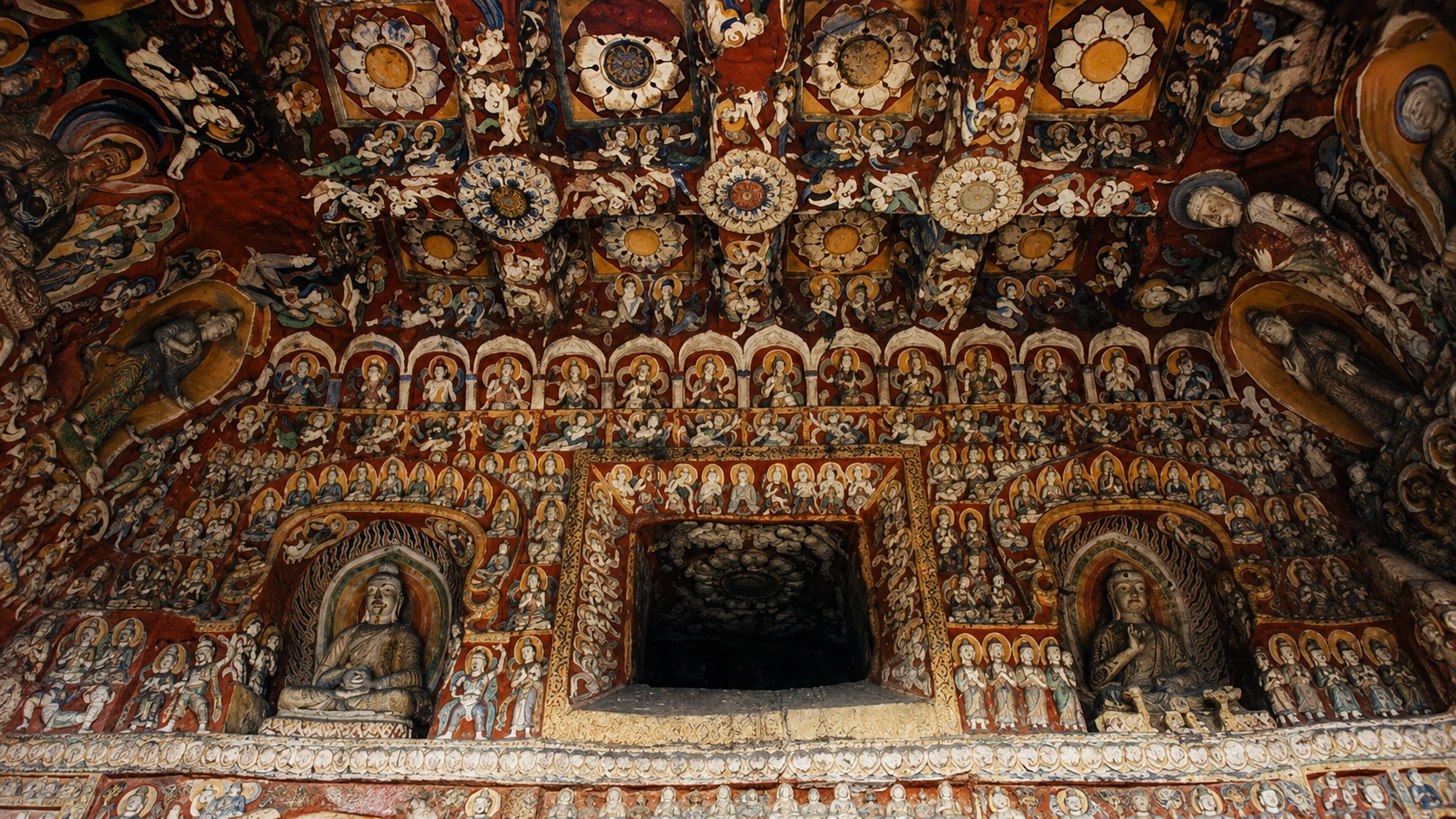
Datong is a small city in northern China that almost no foreign visitor has heard of. But it has some of the most amazing things to see in all of China.
A cliff with 51,000 Buddhas carved into it. A wooden temple built fifty metres above the ground on the side of a mountain. A wooden tower that has stood for nearly a thousand years without a single nail holding it together.
All of it is about two hours from Beijing by train.
Datong is high up and far north, so while many parts of China are above 30 to 35 degrees in July, the temperature here is around 20 to 29 degrees (68 to 84°F). Chinese travellers come here in summer to escape the heat. Almost no foreigners know about this place yet.
This guide is for everyone, with a visa or without one. And because visa-free travel is what we write about every day, we will also explain which visa-free policies let you travel to Datong.
Check Which Visa-Free Policy You're Using
Datong is a city inside a province called Shanxi. Shanxi is one of China's 34 provincial-level regions, which work roughly like states.
Most visa-free rules don't limit where you can go. On the 30-day policy or a mutual exemption, you can travel almost anywhere in mainland China.
The 240-hour transit policy is different. It only lets you into certain areas, and in a few places the limit is set city by city instead of province by province.
Shanxi is one of those places.
Travelling with a visa? Skip this section. You can go anywhere in Shanxi.
On the 30-day visa-free policy? All of Shanxi is open to you.
Is your passport covered by a mutual visa exemption agreement? Same. All of Shanxi is open. Just check the agreement covers ordinary passports, because a few only cover diplomatic or official ones.
On the 240-hour transit policy? Read the next part carefully.
Not sure which one you're on? Our eligibility checker will tell you in a few seconds.
The One Mistake Almost Everyone Makes
On the 240-hour transit policy you can only visit two cities in Shanxi: Taiyuan and Datong.
Almost every guide and tour agency sells the same Shanxi route, and it has two stops: Datong for the Buddhist caves, and Pingyao for the ancient walled city.
Pingyao is not on the permitted list for the 240-hour policy. So you can't go there if you came to China using this policy.
This only affects eight nationalities. If your passport is from the United States, Mexico, Ukraine, Indonesia, the Czech Republic, Lithuania, Kyrgyzstan or Vietnam, the 240-hour transit policy is your only visa-free option for visiting this part of China.
Everyone else on the 240-hour list is also eligible for the 30-day visa-free policy. If that's you, it's probably the more convenient policy to travel on, because it gives you much more freedom over where you can go. You can travel all around Shanxi and almost everywhere else in China.
If Pingyao is the reason you're coming to Shanxi, check whether your passport qualifies for the 30-day policy or a mutual visa exemption. If the 240-hour policy is the only visa-free option for your passport, get a tourist visa to visit Shanxi.
Travel policy note. Visa-free entry rules and permitted travel areas can change. This guide was checked on August 10, 2026. Before your trip, confirm your eligibility, permitted travel area, and entry requirements with China's National Immigration Administration.
The Yungang Grottoes
Open on every visa-free policy.
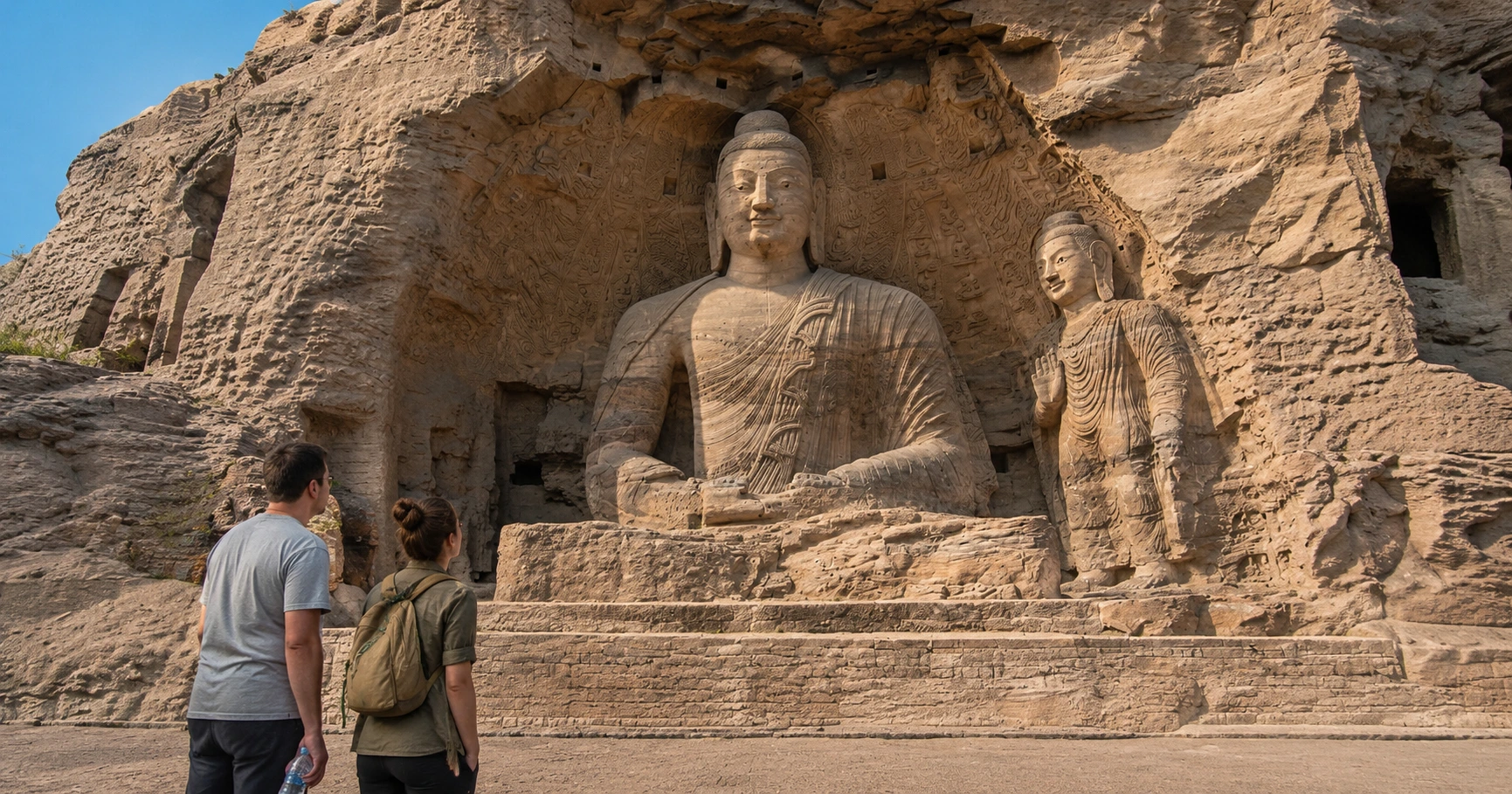
Fifteen hundred years ago, the emperors of the Northern Wei dynasty ruled China from Datong. They sent workers to a cliff outside the city and told them to carve Buddhas into the rock.
Not statues made somewhere else and carried in. Carved out of the mountain, in place, where they still stand today. The whole work took about sixty years.
The result is 252 caves holding 51,000 statues, spread along a kilometre of cliff.
The scale of it is what makes it so special. Walk into one cave and there's a Buddha seventeen metres tall, higher than a five-storey building, sitting with his knees at your eye level. Walk into the next and every surface from floor to ceiling is covered in carvings the size of your thumb, thousands of them, each one a separate little figure. Some still have their original paint.
The most famous ones are caves 5 and 6, which are the most richly carved, and cave 20, where the front wall fell away hundreds of years ago. The giant Buddha inside is now out in the open air, looking straight at you.
Give it three to four hours. There's very little shade, so go early or late and bring a hat and water. It can be very hot during the peak sun hours.
Getting there: it's about 16 kilometres from the city centre. There are buses that go there, or you can just take a taxi.
Tickets: 120 yuan (about $17) in the busy season from April, and 100 yuan (about $14) in the quiet season. It's easier if you book ahead.
It has been on the UNESCO World Heritage list since 2001.
The Hanging Temple
Open on every visa-free policy.
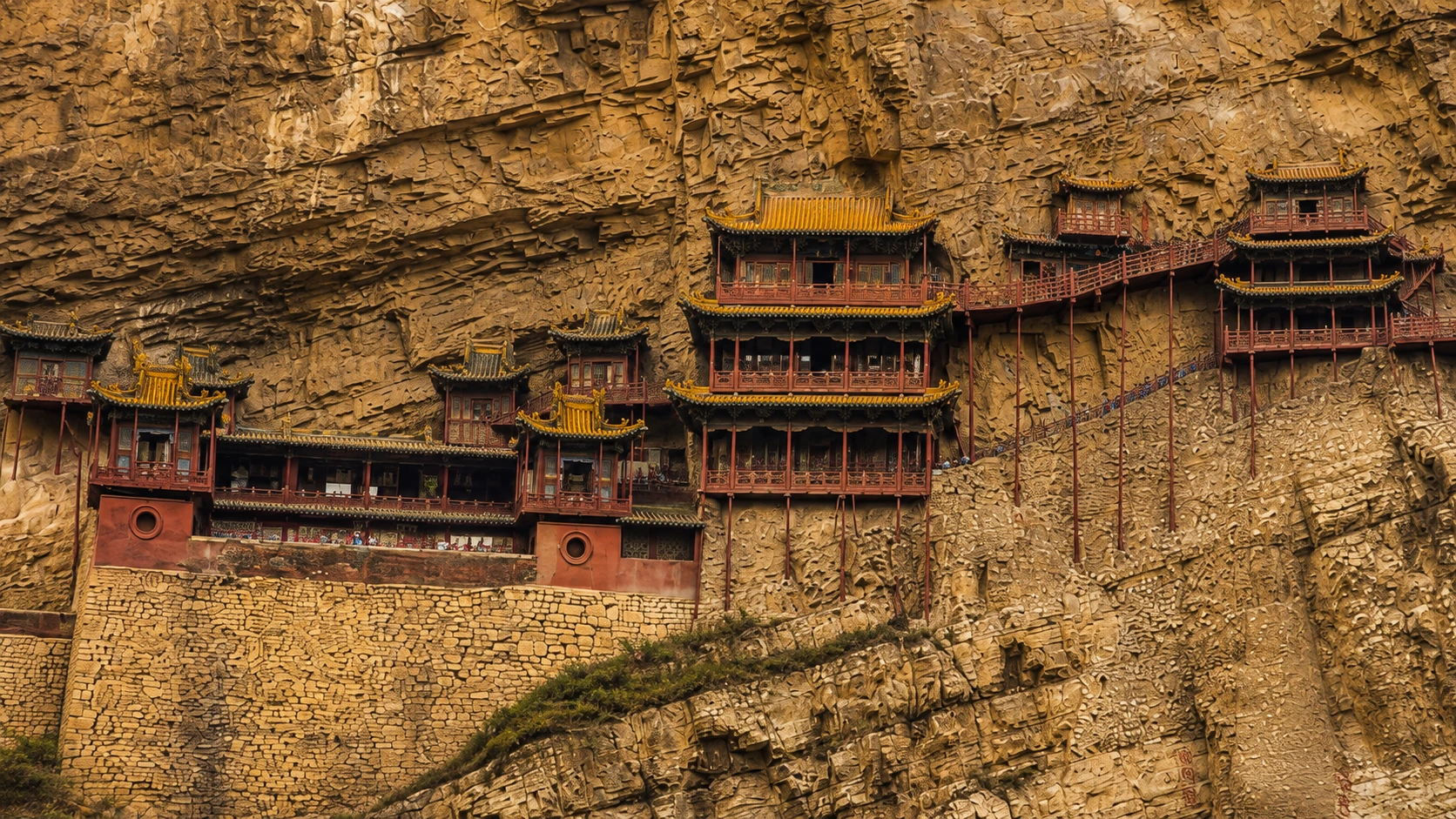
Picture a cliff. A flat vertical wall of rock going straight up.
Fifty metres above the ground, about the height of a fifteen-storey building, someone has built a wooden monastery onto the face of it. More than forty small halls and pavilions with red pillars and painted roofs, joined together by narrow wooden walkways.
Look at it and you see thin wooden poles underneath. You think they hold it up. They do help, but that's not what really holds it up.
Long wooden beams go deep into holes cut in the cliff. You can't see them, because they sit inside the rock. The whole building is fixed onto those.
It dates back to the late Northern Wei period, more than 1,500 years ago, and it has been repaired and rebuilt many times since.
Read this next part before you plan your day. It is the most important thing on this page.
There are two different tickets.
- The entry ticket costs 15 yuan (about $2). It allows you to enter the area at the bottom of the cliff, where you can stand and look at the temple from far away.
- The climbing ticket costs 100 yuan (about $14). This is the ticket that allows you to go up and visit the temple.
The climbing tickets are limited every day. Since April 2026 the daily number is 2,475. About 1,200 of those are sold online, and about 1,275 are sold at the ticket window on the day.
If you have a foreign passport, you can't buy the climbing ticket online. The online system checks your face against a Chinese ID card, and passports aren't part of it. Passport holders are told to buy the ticket at the ticket window instead.
So bring your passport and go early. Buy at the window when the ticket office opens. In busy months the tickets sell out quickly.
This is how it worked in August 2026. The rules here changed several times during the year, so check the current situation before you travel.
Getting there: about 65 kilometres southeast of Datong, at the foot of Mount Heng, near a town called Hunyuan. The easiest way is a day tour with transfer from Datong. You can also hire a driver for the day, or take a taxi. One and a half to two hours is usually enough for the temple.
Two More Things Nearby
Open on every visa-free policy.
The Hanging Temple is out of town, so it makes sense to see these on the same day.
The Yingxian Wooden Pagoda
A tower nine hundred and seventy years old, built entirely of wood. It's 67 metres tall, about as high as a twenty-storey building.
From outside you can only count five floors, because each floor is huge. Inside there are really nine floors. Four of them are hidden between the ones you can see, and they hold up the weight.
There is not a single nail in it. The pieces of wood lock into each other, and that's the only thing holding it up. It has survived repeated earthquakes.
You can only go into the ground floor now, because the tower is old and fragile and they are protecting it. Inside there is a Buddha ten metres high. Half an hour is enough.
Mount Heng
One of China's five sacred mountains, right behind the Hanging Temple. There are old temples all the way up the slopes.
Tickets are 45 yuan (about $6), and a cable car up costs 70 yuan (about $10) one way. Spend two to three hours there.
The Old City
Open on every visa-free policy.
The middle of Datong has a big wall all the way around it, wide enough to walk on top.
The wall has Ming-dynasty origins, but much of what you see today is modern restoration and reconstruction, done as part of the city's rebuilding project after 2008. It's the same size and shape as the one that stood there before, so from up there you can see how a Chinese city used to be built.
Since June 2026 the wall is free to walk on, open from 7am to 10pm.
One of the most popular things to do here is rent a bike, which costs about 15 yuan an hour (roughly $2), and ride around the wall. The full circle takes about an hour and a half. The best views are in the afternoon and at sunset. Go up at the south gate.
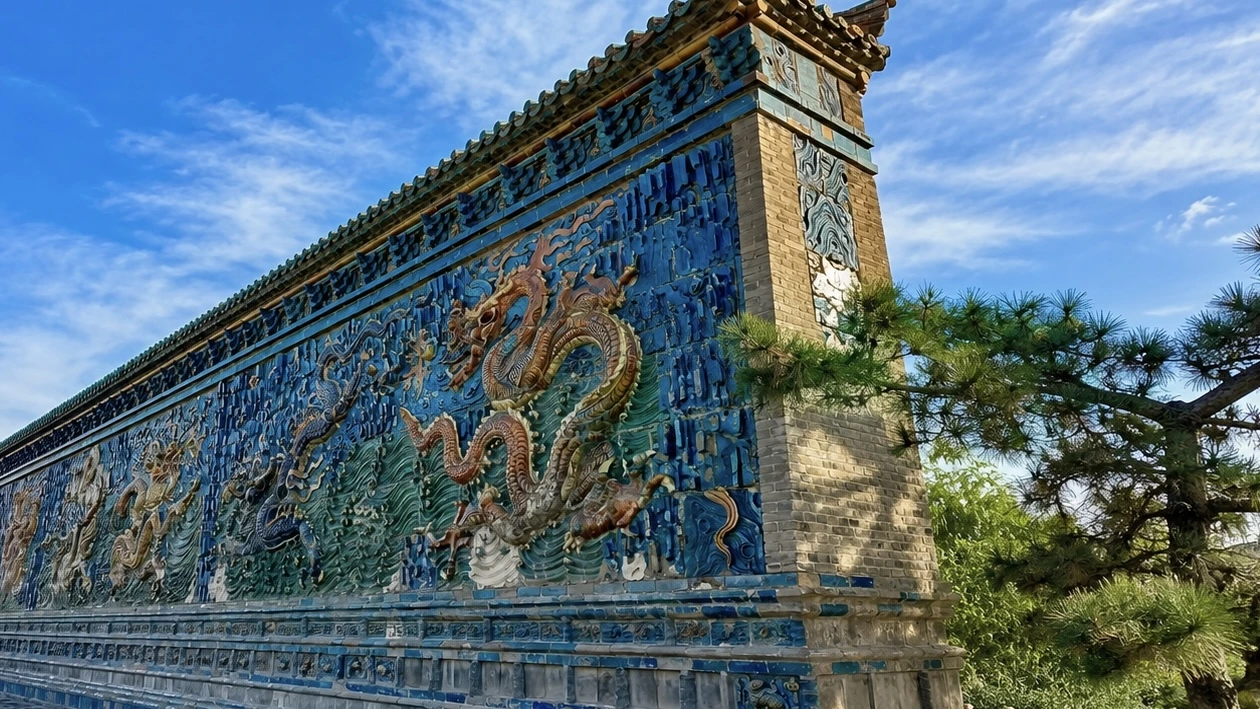
The Nine Dragon Wall. Tickets are 10 yuan (about $1.50), and twenty minutes is enough to visit it. It's a wall 45 metres long, covered in glazed coloured tiles, with nine dragons twisting across it. There are three famous nine-dragon walls in China and the other two are in Beijing, but this one is the biggest and the oldest. It was built to stand in front of a prince's palace. The palace burned down. The wall is still there.
Huayan Temple. A big temple complex in the middle of the old city. Its main hall was built more than 900 years ago and is one of the largest wooden buildings left in China from that time. Inside are rows of painted statues and old murals. Tickets are 50 yuan (about $7) in the busy season, and you can book them here. Closed on Mondays. An hour and a half is enough.
Shanhua Temple. Quieter, and either free or a small charge depending on when you go, because the price has changed recently. This is the most complete temple complex of its age left in the country, and because few people know it, you can often have the courtyards almost to yourself. The painted clay statues inside are the reason to go. Closed on Mondays.
In the evening, the streets around the Drum Tower light up, and the lanes of the Dongnanyi quarter are full of small cafés, courtyard bars and craft shops. It's the nicest place in the city to walk after dark.
What to Eat
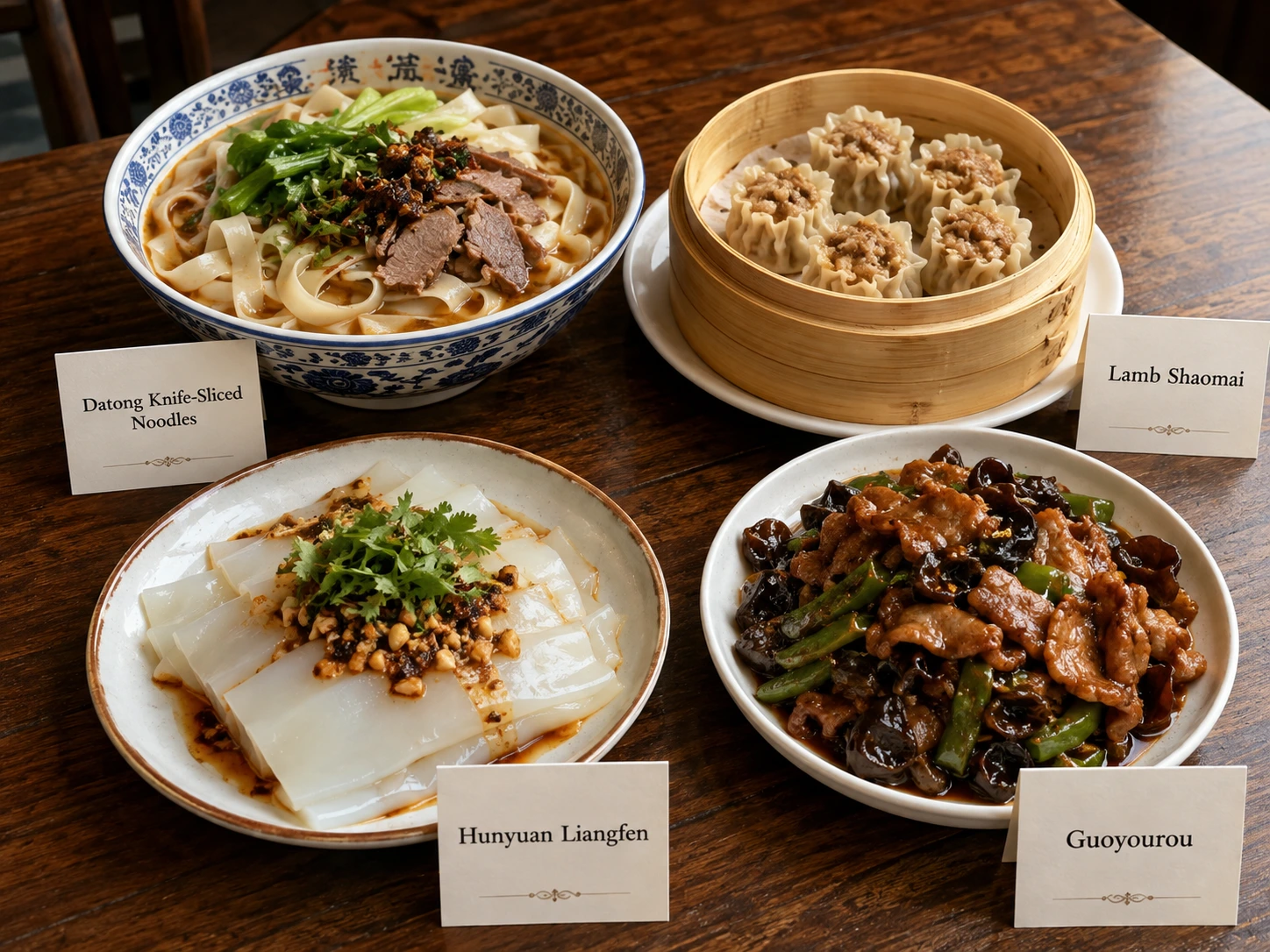
This part of China grows wheat, not rice. So people here eat noodles and bread.
Knife-sliced noodles. The famous one. Go and watch them being made.
The cook holds a big piece of dough on one arm and a knife in the other. He shaves thin strips of dough off the big piece straight into a pot of boiling water, very fast, one after the other. They come out thick and chewy in a bowl of meat soup.
Every noodle shop in Datong makes them, and a bowl costs about two dollars.
Lamb shaomai. Little steamed dumplings, open at the top and pleated at the neck like a small bag, filled with lamb. A Datong speciality.
Hunyuan liangfen. Cold jelly noodles, cut fresh in front of you, served with chilli oil, vinegar and pieces of dried tofu. Sold from stalls for about 5 yuan a bowl (under a dollar). Perfect on a hot afternoon.
Guoyourou. Thin slices of pork, fried quickly and served in a light savoury sauce. The classic Shanxi restaurant dish.
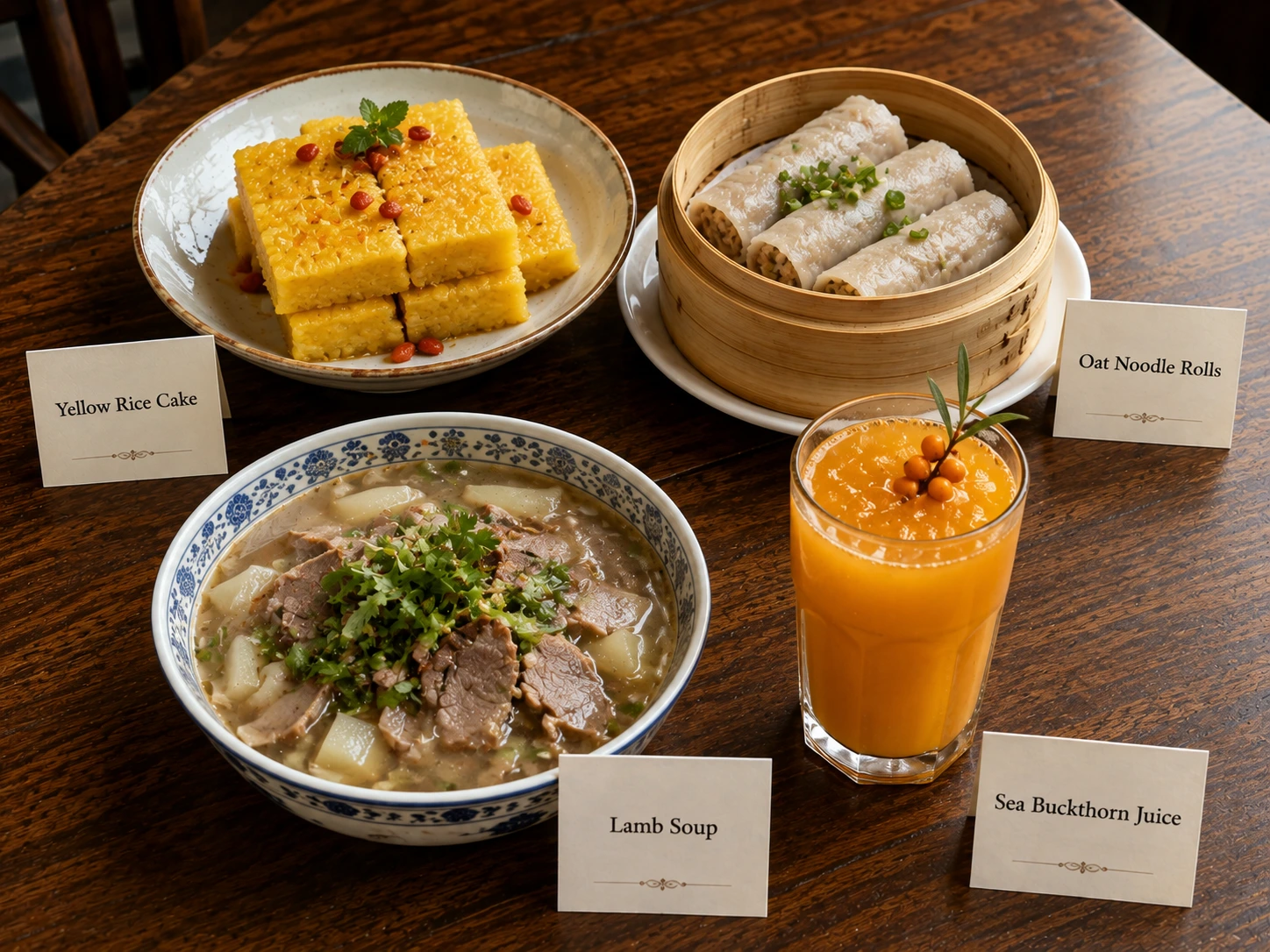
Also worth trying: yellow rice cake, oat noodle rolls steamed in little baskets, lamb soup, and sea buckthorn juice, which is bright orange, sharp and sweet, and grows all over this part of China.
Portions in this province of China are pretty big, so don't order too much.
Getting to Datong
From Beijing, the train takes about two to two and a half hours. There are many trains at almost any time of the day.
Make sure you book tickets from the right station. Both Datong and Beijing have more than one station.
- Beijing trains leave from Beijing Qinghe or Beijing North, not from Beijing's main station.
- They arrive at Datong South, not Datong's old station.
From Taiyuan, the train also takes about two to two and a half hours. Taiyuan is the other Shanxi city open to 240-hour travellers, and its airport is one of China's entry ports, so you can fly straight to Taiyuan if Shanxi is your trip destination.
Datong has its own international airport, with a small but growing list of routes. Most overseas visitors still come to the city by train.
Chinese trains sell out, especially at weekends and holidays. Book the tickets as soon as you know the exact date of your trip. Have your passport ready for the check-in on your travel day.
Three to Four Days in Datong
Three to four days is enough for a Datong trip, and it gives you enough time to visit all the must-see places.
Day 1. Arrive and see the old city.
Morning train from Beijing. Drop your bags, then spend the afternoon in the old centre: the Nine Dragon Wall, then Huayan Temple. Around five o'clock, go up onto the city wall at the south gate, rent a bike, and ride the loop as the sun goes down. Dinner in the old city, then walk on the lit-up streets around the Drum Tower.
Day 2. The Yungang Grottoes.
Go early, before the sun is high. Take your time in the big caves and look around properly, because there are so many statues, big and small, and the more you look the more you see. Most people spend three to four hours there. Come back to the city for a late lunch of knife-sliced noodles. Spend the afternoon at Shanhua Temple, which is quiet, then the Dongnanyi lanes for coffee and dinner.
Day 3. The Hanging Temple and the wooden pagoda.
The long day. Book a day tour from Datong or hire a driver for your convenience. Go to the Hanging Temple first, and buy your climbing ticket at the window as early as you can. Have lunch in Hunyuan, the small town nearby, where the cold jelly noodles come from. Then visit the Yingxian Wooden Pagoda on the way back.
If you prefer to travel at a slower pace, extend the trip by one day and move some of these things to day four. Mount Heng is the easiest thing to add, because it's right next to the Hanging Temple.
On the 30-day policy or a mutual exemption, you can go to Pingyao after Datong. Beijing, Datong and Pingyao together make a very good week trip: Beijing for emperors, Datong for Buddhism, Pingyao for merchants and money.
On the 240-hour policy, don't go to Pingyao, because it isn't allowed under your visa-free policy. Beijing and Datong is already a great trip on its own, and you can go on to Xi'an or Shanghai after.
If after reading this guide you feel a little overwhelmed and it feels like too much new information, check out our Trip Planning service.
Trip Planning is where we build the whole route for you. Which places, in what order, how many days in each, where to stay, and how to get between them. We hand you the plan and you book everything yourself, so you can change whatever you want as you go.
Where to Stay
Stay inside the old city walls. Everything in the centre is walkable from there, including Huayan Temple, Shanhua Temple and most of the noodle shops, and it's easy to get a taxi to the grottoes.
Datong is a small city, so hotels cost far less than in Beijing or Shanghai. There are also a lot of small guesthouses inside old courtyard houses in the old town, which are more interesting than the chain hotels and usually cheaper. You'll find plenty on Trip.com, which is a China-based platform with a much bigger range of Chinese hotels than most Western sites, and it works in many languages.
What to Bring
- Your passport. On the 30-day policy it must be valid for at least as long as you're staying. On the 240-hour transit policy you need at least three months left on it from the day you arrive. If yours is expiring soon, renew it before the trip.
- Your arrival card. Fill it in online before you fly at s.nia.gov.cn, or do a paper one when you land. Our China entry requirements guide explains how to fill in the arrival card step by step.
- A ticket out of China. On the 240-hour policy you must have a confirmed ticket, and it must go to a third country, not to the same country you came from. On the 30-day policy it isn't officially required, but it's good to have one.
- Your hotel booking, or the address of wherever you're staying.
- A rough plan of which cities you're visiting. It doesn't have to be too detailed, but you should be able to explain your travel plans if you're asked.
Pack a light jacket even in summer. Check the temperature before your trip, because it changes a lot with the season.
Datong is high up and far north. Days are 20 to 29 degrees (68 to 84°F) in June to August, but mornings and evenings drop about ten degrees, and the top of Mount Heng is colder than the city. The sun is very strong up there, so bring sunscreen and a hat.
Wear soft, comfortable shoes. You'll be walking a lot.
Before You Go
None of these are immigration requirements. They're the things that decide whether your first few hours in China are smooth or frustrating.
Get mobile data before you fly. Get a China eSIM or international roaming before you leave home, so the internet works the moment you land. You can also buy a SIM card at the airport.
Download a VPN. Google, Gmail, WhatsApp and Instagram don't work in China without one. Our China VPN guide covers which ones actually work. If your eSIM has a VPN built in, that only covers your phone's data, so you'll still want a normal VPN for hotel and café Wi-Fi.
Set up Alipay or WeChat Pay. Almost everything in China is paid by phone. Link your card before you fly. Carry a little cash as a backup. This matters more in a small city like Datong, where street stalls and noodle shops often have no card machine at all.
Setting these apps up from home can be confusing, and a lot of the tutorials online are out of date. So we made our own. Our China payment setup guide shows both apps step by step, with screenshots from 2026. You'll see how to download them, register, add your card, and verify your identity. It's $4.90 and you get it straight away.
If you'd rather have all of it in one place instead of hunting through separate articles, we've put everything into one big PDF guide. Buy it once and it's yours to keep.
Want Us to Help?
Route Review. Send us the route you're planning and we'll check it against the rules before you book anything. We'll tell you which policy your passport qualifies for, and whether every stop on your list is somewhere you're actually allowed to go. Shanxi is where people get this wrong more than almost anywhere else in China, because only two cities in the province are open on the transit policy.
Or just email us and tell us what you're planning.
FAQ
Can I visit Datong without a visa?
Yes, on any of the three policies. Datong is one of only two cities in Shanxi open to 240-hour travellers, and it's fully open on the 30-day policy and mutual exemptions.
Can I visit Datong and Pingyao together?
Only on the 30-day policy, a mutual exemption, or a tourist visa. The 240-hour transit policy covers just Taiyuan and Datong in Shanxi.
How long is the train from Beijing?
About two to two and a half hours, with trains at almost any time of day. They leave from Beijing Qinghe or Beijing North and arrive at Datong South.
How many days do I need?
Three to four. That covers the Yungang Grottoes, the Hanging Temple, the wooden pagoda and the old city without rushing.
Can I book the Hanging Temple climbing ticket online?
Not with a foreign passport. The online system checks your face against a Chinese ID card, and passports aren't part of it. Buy the climbing ticket at the ticket window instead, and get there early, because the daily tickets are limited and sell out quickly in busy months. This was the situation in August 2026, and the rules have changed more than once this year.
Is the Hanging Temple safe?
Yes. It has stood for over 1,500 years and it's looked after and inspected. It doesn't feel safe, which is a different thing. If you don't like heights, look at it from below.
What's the best time to visit?
Late April to early June, and September to October, are the most comfortable. June to August is worth thinking about too, because while many parts of China are above 30 to 35 degrees, Datong stays between 20 and 29. Chinese travellers come here to escape the summer heat. Winter goes well below freezing.
Do people speak English?
Not much. Bring a translation app, use the camera on it to read menus, and save your hotel's address in Chinese characters on your phone.
Is Datong safe?
Yes. It's a small city and most visitors have no trouble. Take the usual care with your things in crowds.
Where do I book tours and tickets?
Most people use Trip.com. It has English-language day trips to the Yungang Grottoes and the Hanging Temple, and private drivers, which is the easiest way to do the day-three loop.
Bottom Line
Datong is two hours from Beijing and holds a cliff carved with 51,000 Buddhas, a temple built fifty metres up a mountainside, and a thousand-year-old wooden tower built without a single nail. Three to four days covers it, and it's cool in summer when much of China isn't.
Two things to get right. If you want to climb the Hanging Temple, buy that ticket at the window and go early, because foreign passports can't use the online system and the daily tickets are limited. And check your policy: on the 240-hour transit policy, Shanxi means Taiyuan and Datong only, so the usual Datong and Pingyao loop doesn't work. On the 30-day policy or a mutual exemption, the whole province is open.
Meeting the conditions doesn't guarantee entry. The officer at the border always makes the final decision. If you have a question before you book, call the China Immigration Service Hotline on 12367 inside China, or +86-12367 from outside.
Sources
- National Immigration Administration — 240-hour visa-free transit policy and permitted areas
- National Immigration Administration — countries covered by unilateral visa exemption
- National Immigration Administration — entry documents and arrival card
- UNESCO World Heritage Centre — Yungang Grottoes
- Datong Municipal Government — scenic area ticket prices and Hanging Temple notices